How embedded AI transformation, vertical software and aligned ownership could build lasting capability across a buy-and-build platform.
By Frideric Pétré, Founder of ScopeRight and Co-founder of Nova
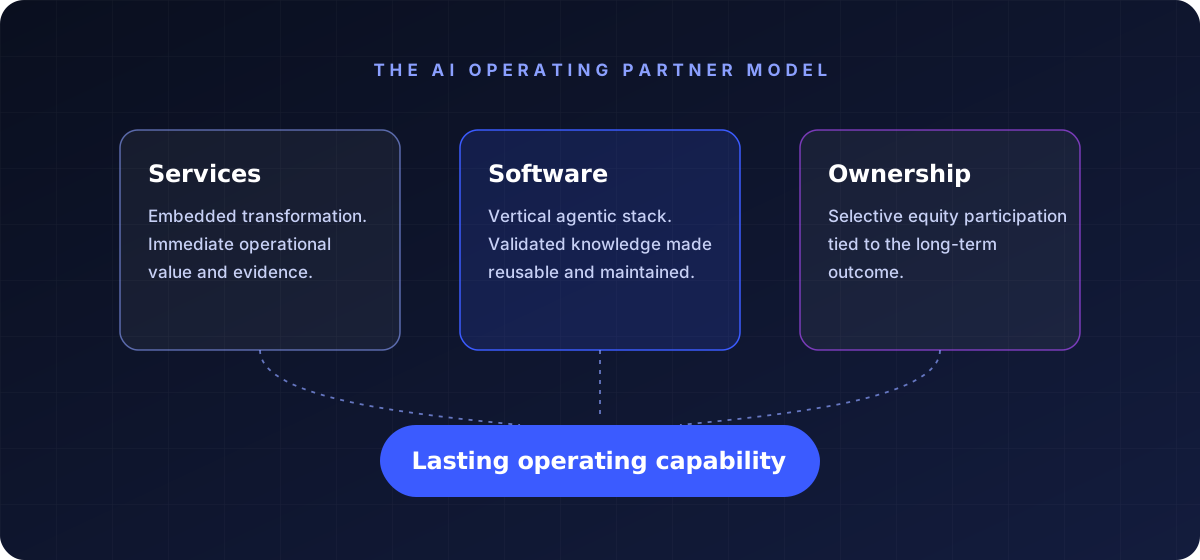
An AI operating partner for private equity should help portfolio companies turn critical workflows into measurable operational improvements and reusable software capability. In the model we are developing, that combines embedded transformation, software built around a specific industry, and selective equity participation tied to the long-term outcome.
I recently shared this thesis in a LinkedIn post. The discussion sharpened a question at the heart of AI value creation in private equity: what remains inside the business after the first transformation project is finished?
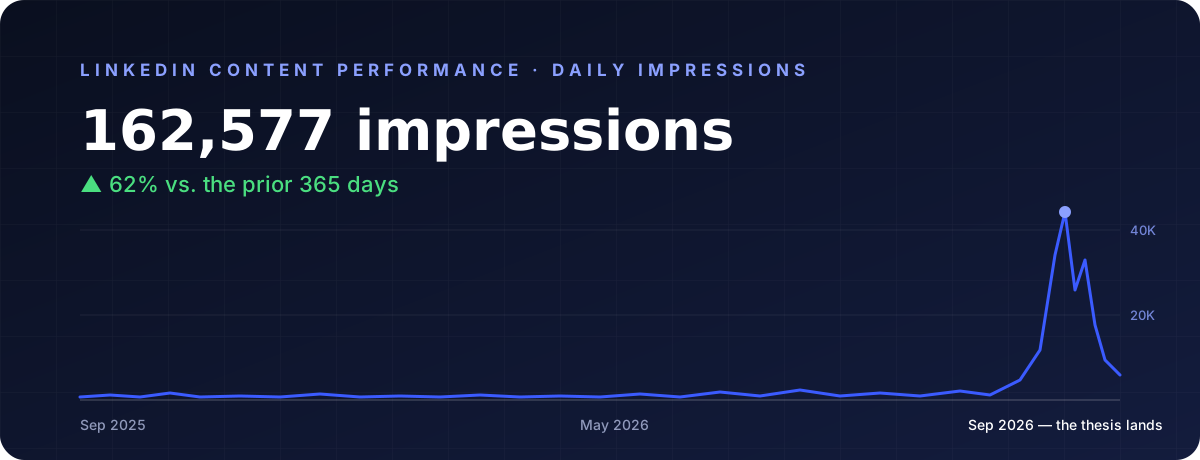
The thesis clearly resonates in the market. Within days, the post passed 160,000 impressions — a 62% jump against the entire prior year of content — and, more importantly, it drew the substantive practitioner discussion quoted throughout this article.
From operational improvement to lasting capability
Bringing capital and operational expertise closer together has a long history. Bain Capital, for example, describes its approach as pioneering value-added investing, drawing on capabilities beyond capital alone. That is a useful starting point for thinking about the next iteration of the operating partner. Bain Capital's investment approach.
AI creates an opportunity to capture more of the knowledge behind operational improvement in systems that teams can keep using and refining.
In the LinkedIn discussion, Rami Nofal put the economic question succinctly:
"turning operating capability into an asset rather than an expense."
Rami Nofal, commenting on the original LinkedIn post.
That is the ambition. A successful engagement should leave behind more than recommendations: working workflows, captured expertise, maintained integrations and evidence about what creates value. Here, "asset" means durable operating capability, rather than a claim about accounting treatment.
What this looks like in the specialist automotive aftermarket
We recently took our first venture participation in the specialist automotive aftermarket. We are supporting the company's AI transformation while building a vertical agentic software stack to support its buy-and-build strategy.
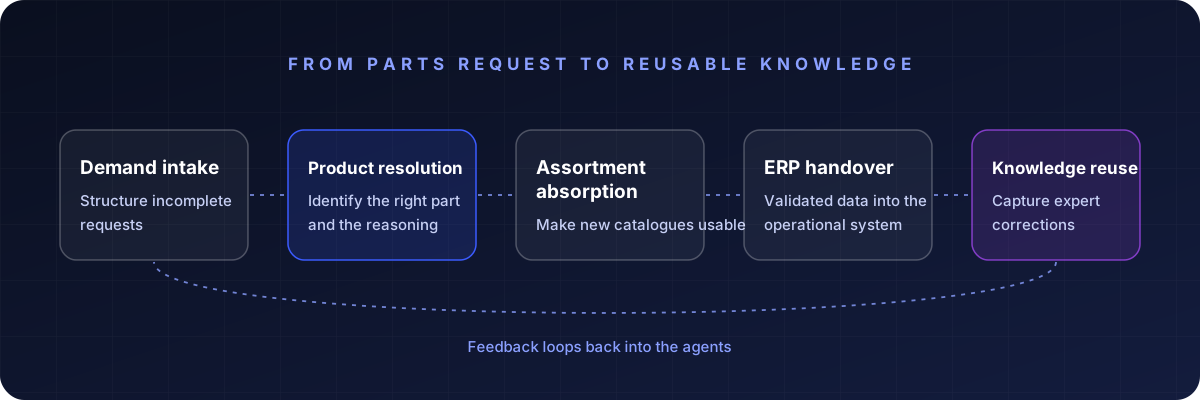
The work centres on how specialist workshops and distributors turn a parts request into a validated, fulfilable solution:
- Demand intake: structuring requests that arrive with incomplete information.
- Product resolution: identifying suitable parts and the knowledge behind that decision.
- Assortment absorption: making additional catalogues usable within existing workflows.
- ERP handover: passing validated information into the operational system.
- Knowledge reuse: capturing expert corrections and feedback from workshops.
A vertical agentic software stack combines AI agents, industry knowledge, business rules and integrations around the workflows of a particular sector. In this case, its usefulness depends on understanding the operational context of specialist parts distribution.
We start with Minimal Viable Agents. An MVA is a working agent scoped to one valuable workflow, able to execute defined tasks autonomously within agreed controls, with human validation where needed. It can be extended, or provide tested requirements for a purchased solution or an internal build.
This is an early implementation, not a proven multi-acquisition result. The evidence we need includes resolution time, operator effort, error rates and how quickly new assortment knowledge becomes usable.
Why the second acquisition is the real test
The first implementation can succeed because it reflects one company's people, systems and habits. A buy-and-build strategy requires something more: knowing which parts of that knowledge transfer to the next acquisition.
Ahmed Shehata highlighted the risk that captured knowledge turns out to be:
"partly local custom rather than domain truth."
Ahmed Shehata, commenting on the original LinkedIn post.
That distinction should shape the software from the beginning. Product compatibility knowledge may apply across a sector. A particular distributor's approval thresholds, supplier preferences or ERP conventions may apply only to that business.
Our design principle is to keep those layers separate. Company rules should retain their source and context. Before a rule becomes shared industry knowledge, it should be checked against independent evidence. Ahmed's suggestion to require a second source before promoting a rule offers a practical discipline to test.
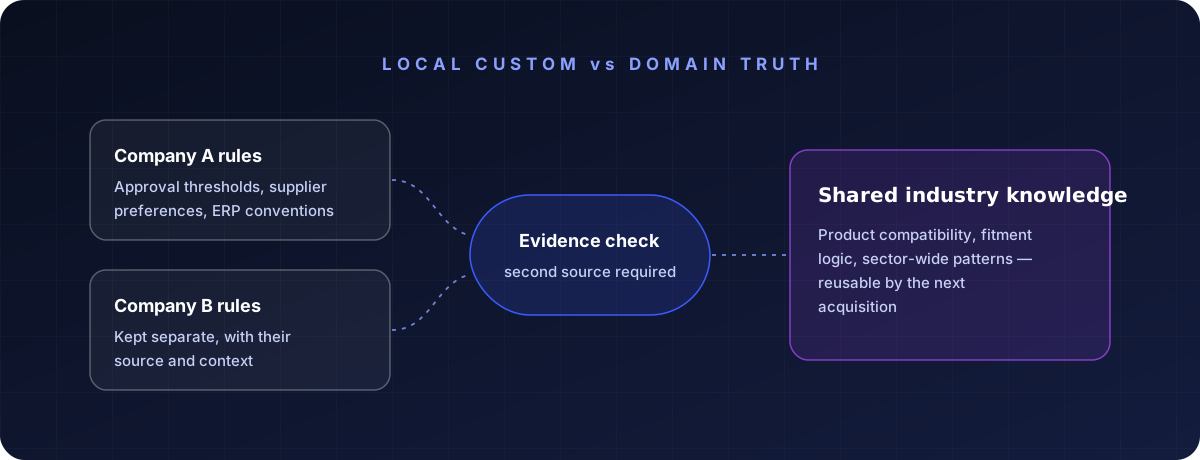
The potential advantage is cumulative learning: each acquisition contributes knowledge while preserving the differences that matter. Success means the next business can adopt useful capability faster, without inheriting the first company's assumptions by default.
Why the partner needs to work inside the operation
Much of this knowledge is discovered through real work: incomplete requests, undocumented exceptions and the judgement of experienced employees.
Pamela Talevski described the importance of being:
"close enough to the work to see where things are actually getting stuck"
Pamela Talevski, commenting on the original LinkedIn post.
This is why embedded transformation matters. The people doing the work help define what a good outcome looks like, validate agent decisions and explain exceptions. Their expertise becomes part of the system's improvement process.
For PE, that connects AI investment to an observable operational problem before committing to a broader rollout. ScopeRight's Govern, Scope, Mobilise operating model provides the decision structure: establish priorities and accountability, define the workflow and evidence required, then mobilise the right implementation.
How services, software and ownership fit together
These three elements serve different purposes.
Services create immediate operational value and evidence. They fund the work of understanding the operation, implementing changes and testing results.
Software makes validated knowledge reusable. It gives teams a maintained capability that can evolve across locations and acquisitions.
Equity participation connects the builder to the long-term outcome. Where appropriate, it gives the technical and product team a stake in what the business becomes.
Equity alone does not resolve every incentive question. Decision rights, delivery responsibilities, software ownership, licensing and continuity need to be explicit. A portfolio company should understand what it owns, what it licenses and how it can keep operating if the relationship changes.
This also explains the relationship between our businesses. ScopeRight governs, scopes and mobilises AI transformation, then helps build the right agents on the best stack for the client. Nova brings reusable backbone technology and acts as a technical and product co-founding team for selected vertical ventures.
Nova is a possible implementation and venture partner. ScopeRight's recommendation must still follow the client's requirements, including existing systems, alternative vendors and internal build options. Any participation interest should be visible in that decision.
Nova describes the mechanism from the builder's side, including the capped contribution and what the last phase of a proof decides, in how an AI build partner earns the next commitment.
Where should a PE team start?
I see the strongest fit in fragmented industries where specialist knowledge drives daily decisions and acquisitions repeatedly introduce new catalogues, processes or systems.
Start with one portfolio company and one workflow tied to the investment thesis. Establish a baseline, give the team access to the relevant experts and systems, and agree what would justify further investment. Then test what transfers to a second operation.
That sequence turns an attractive AI narrative into evidence about operating performance and repeatability.
The next PE operating partner may combine embedded delivery, vertical software and ownership around a specific investment thesis.
A builder with skin in the game.
Considering this approach for a portfolio company or buy-and-build platform? Discuss your AI priorities with ScopeRight. We can start with one critical workflow, the value at stake and the evidence needed to decide what comes next.
Want to scope your AI project before choosing a partner?
30-minute free intake. Real read on your scope, not a sales call.