An AI agent can finish a task, produce a convincing answer and still get the business decision wrong. Before you put that agent into a live workflow, you need a clear way to judge its work.
An eval is a test that checks whether an AI agent completed a task correctly, against defined criteria for a good result.
At ScopeRight, we see evals as part of the work of scoping AI transformation. They connect what the business expects with what an agent must demonstrate before it earns more responsibility.
Our starting point is simple: if we cannot describe good performance, we are not ready to delegate the task.
What are AI agent evals?
AI agent evaluations, usually shortened to "evals", assess an agent's answers, actions or decisions against an expected result or a written quality standard.
An eval needs a task, the context and tools available to the agent, and a way to judge the outcome. That judgement can come from an automated check, an expert reviewer or a model applying a defined rubric.
A rubric is simply a written description of what good looks like. For example: use verified information, identify missing evidence and ask for approval before making a commitment.
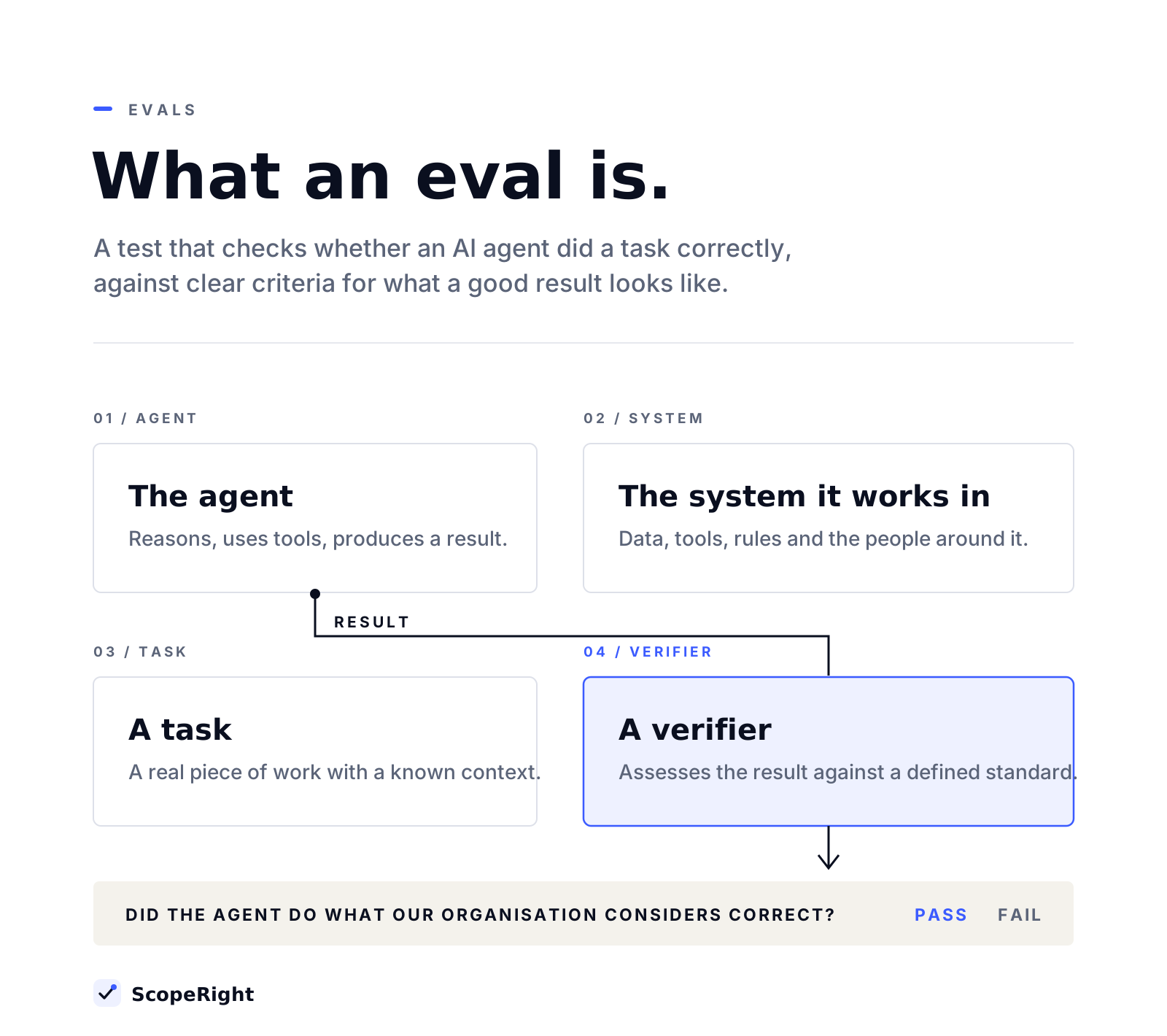
The distinction matters because technical success and business success are different measurements. An agent may successfully send an email containing an unsupported delivery promise. The tool worked; the task was handled incorrectly.
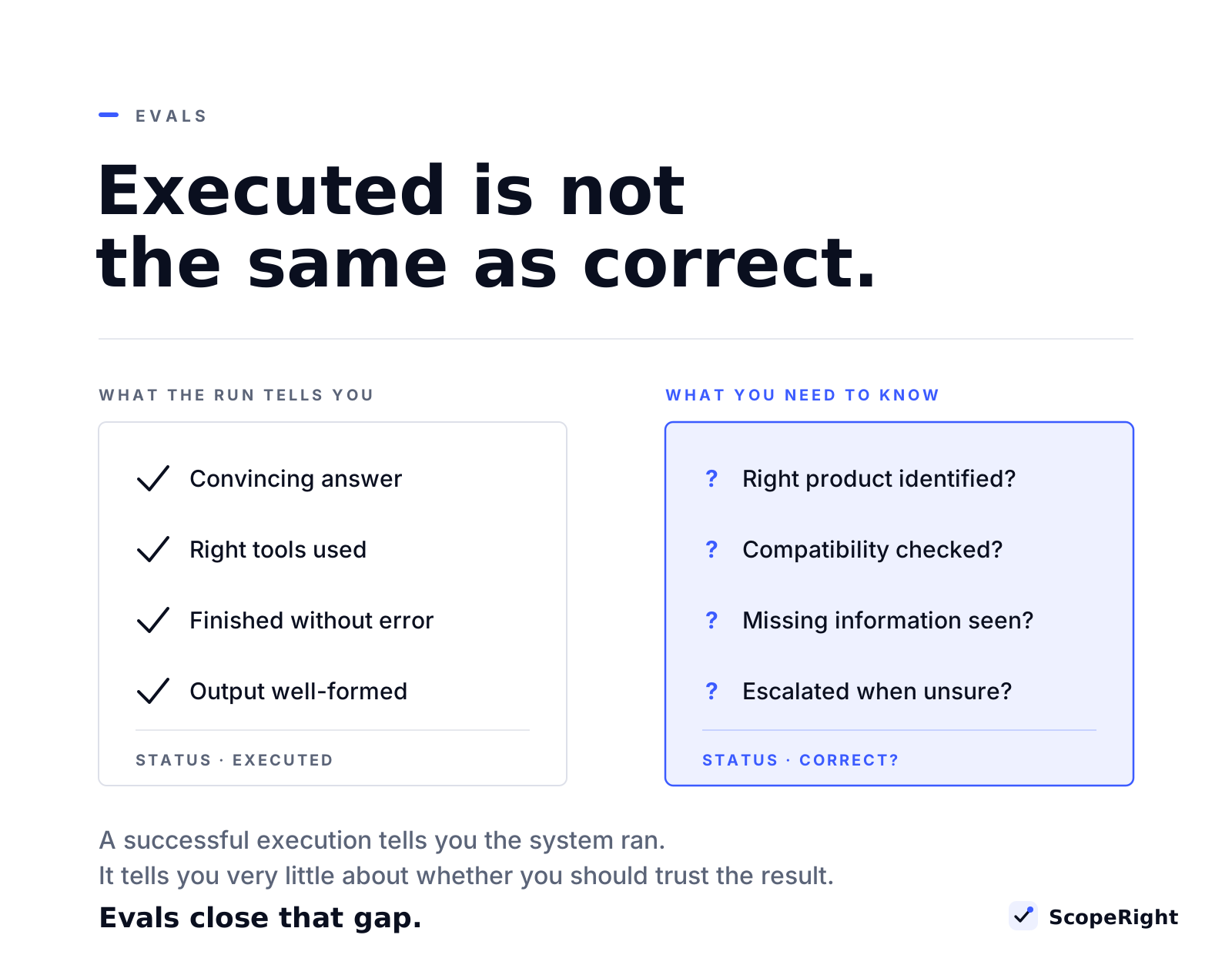
Why should business leaders care about evals?
Evals make decisions about automation more evidence-based.
They help teams assess whether an agent is ready for a pilot, whether a change improves its work and where human review remains necessary. They also provide a common reference point for business owners, technology teams and delivery partners.
This is particularly useful when comparing suppliers or models. A polished demonstration shows what a system can do in selected conditions. An agreed evaluation set tests how it handles your organisation's work, including difficult cases.
Evals also help protect the business case. An agent that produces answers quickly but requires extensive checking may save less time than expected. Quality scores need to be considered alongside review effort, rework, turnaround time and operating cost.
How we approach evals at ScopeRight
Our view is that evaluation should begin during scoping and continue through delivery. We organise that thinking around five questions.
1. What does a successful task look like?
We start with a specific workflow and the people who understand it.
For a sales support agent, success might mean preparing a complete, evidence-backed account briefing. For an operations agent, it might mean turning an incomplete customer request into information an employee can act on.
"Accurate and helpful" is too broad to guide implementation. We need to identify the required information, acceptable assumptions, prohibited actions and escalation conditions.
This is where working alongside employees matters. Their corrections and exceptions often reveal the standards missing from process documentation.
2. Which cases must the agent handle?
An evaluation set should reflect the work the agent is expected to encounter.
That includes routine requests, incomplete information, ambiguous cases and situations in which the right action is to stop and ask for help. Known failures deserve particular attention.
Start with a manageable, representative set and version it. Keep a stable benchmark for comparisons, then add new cases deliberately as the workflow develops. Where possible, reserve cases the team has not used to optimise the agent, so the evaluation tests more than familiarity with the examples.
3. How will we judge the result?
Use the simplest reliable check for each criterion.
Structured fields and numerical rules can often be checked automatically. More contextual judgements may require a rubric and expert assessment. Model-based reviewers can help with scale, but their assessments also need to be checked against human judgement.
Consider an illustrative distributor workflow:
| Task | What the eval checks |
|---|---|
| Interpret a parts request | Required details are extracted; missing information is flagged |
| Recommend a product | Compatibility is supported by available evidence |
| Prepare a quotation | Prices come from an authorised source; required approvals are respected |
| Handle uncertainty | The agent asks for clarification when the evidence is insufficient |
The evaluation should reward appropriate escalation. A confident answer is not always a successful answer.
4. What evidence would justify a pilot?
Acceptance criteria should be agreed before reviewing the results.
Different errors carry different consequences. A formatting issue and an unauthorised commercial commitment should not disappear into the same average score.
We favour reporting performance by task and failure type, with explicit limits for critical errors. Where repeated runs produce different outcomes, that variability also matters.
For a Minimal Viable Agent — a narrowly scoped agent designed to prove value in a real workflow — the initial ambition should be specific enough to evaluate properly. A bounded task makes it easier to determine what can be automated and what still needs review.
5. Who owns the standard after launch?
The business process owner should remain accountable for what counts as acceptable work. Technology teams and delivery partners translate that standard into tests, monitoring and release decisions.
After launch, reviewer corrections, exceptions and operational failures provide new evaluation cases. Capture enough context to understand what happened, with appropriate access controls and retention rules.
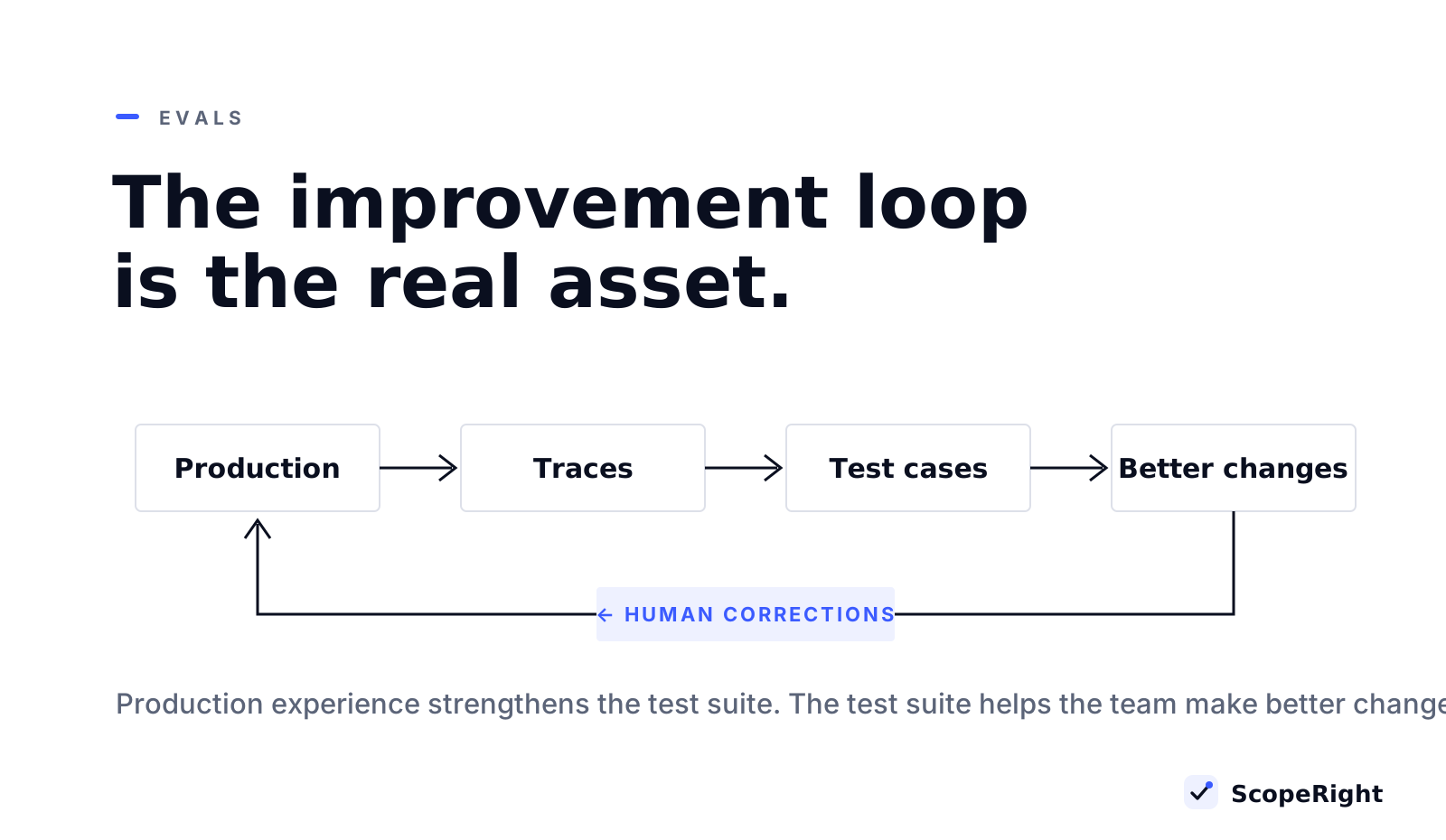
When prompts, tools, models or data sources change, rerun the relevant evaluations. A previous result does not establish the quality of a changed system.
How do evals connect to AI governance and ROI?
Evals give governance decisions an evidence base. They help determine which actions an agent may take, when approval is required and what would trigger a pause or rollback.
They also support ROI measurement, but an eval score is not a financial return. A business case still needs evidence of operational improvement: less handling time, fewer errors, faster throughput or greater capacity, after accounting for review and running costs.
For private equity firms and portfolio companies, we see an opportunity to establish common evaluation disciplines across businesses while keeping acceptance criteria specific to each operation. The method can be shared; the definition of correct work must reflect the workflow.
Start with the standard you want the agent to meet
At ScopeRight, we believe a properly scoped AI initiative should make three things explicit: the outcome it aims to improve, the evidence that will demonstrate quality and the person accountable for accepting the result.
Evals connect those decisions to delivery. They turn operational expertise into criteria that can be tested, challenged and improved.
Planning an AI agent pilot? ScopeRight helps you define the workflow, acceptance criteria and delivery approach needed to test its value in practice.
Frequently asked questions
- Are evals the same as software tests?
- They overlap. Software tests check components and expected behaviour. Agent evals also assess the quality of decisions, actions and outputs where several responses may be acceptable.
- Can another AI model evaluate an agent?
- Yes, using defined criteria. Its judgements should be calibrated against expert reviews, particularly for ambiguous or consequential tasks.
- Do evals replace human oversight?
- No. They help determine where oversight is needed and whether an agent meets the standards for a defined level of autonomy.
- When should an organisation start building evals?
- During scoping, once the workflow and intended outcome are clear. Defining evaluation criteria early gives the business and delivery team a shared target.
Want to scope your AI project before choosing a partner?
30-minute free intake. Real read on your scope, not a sales call.