By Frideric Pétré, Founder of ScopeRight and Co-founder of Nova
The question comes up in almost every management conversation I have: what happens to our ERP or CRM when agents start doing the work?
It is the right question, and it is usually asked too late — after a licence renewal is on the table, or after an integration programme has already been budgeted. The decision is easier to make well a quarter earlier, with a deliberate look at what each system actually does for the business.
Over the next decade, we expect systems of record to move towards data platforms with an intelligent workflow layer on top of them — the records stay, the workflow moves.
What is actually changing
For thirty years the value of enterprise software sat in two things at once: it held the records, and it enforced the process. You bought the second to get the first.
Agents separate those two things. A well-scoped agent can read the request, check the stock, apply the pricing rule, prepare the document and stop for approval — across systems, without a person moving data between screens. The process logic no longer has to live inside the application that stores the record.
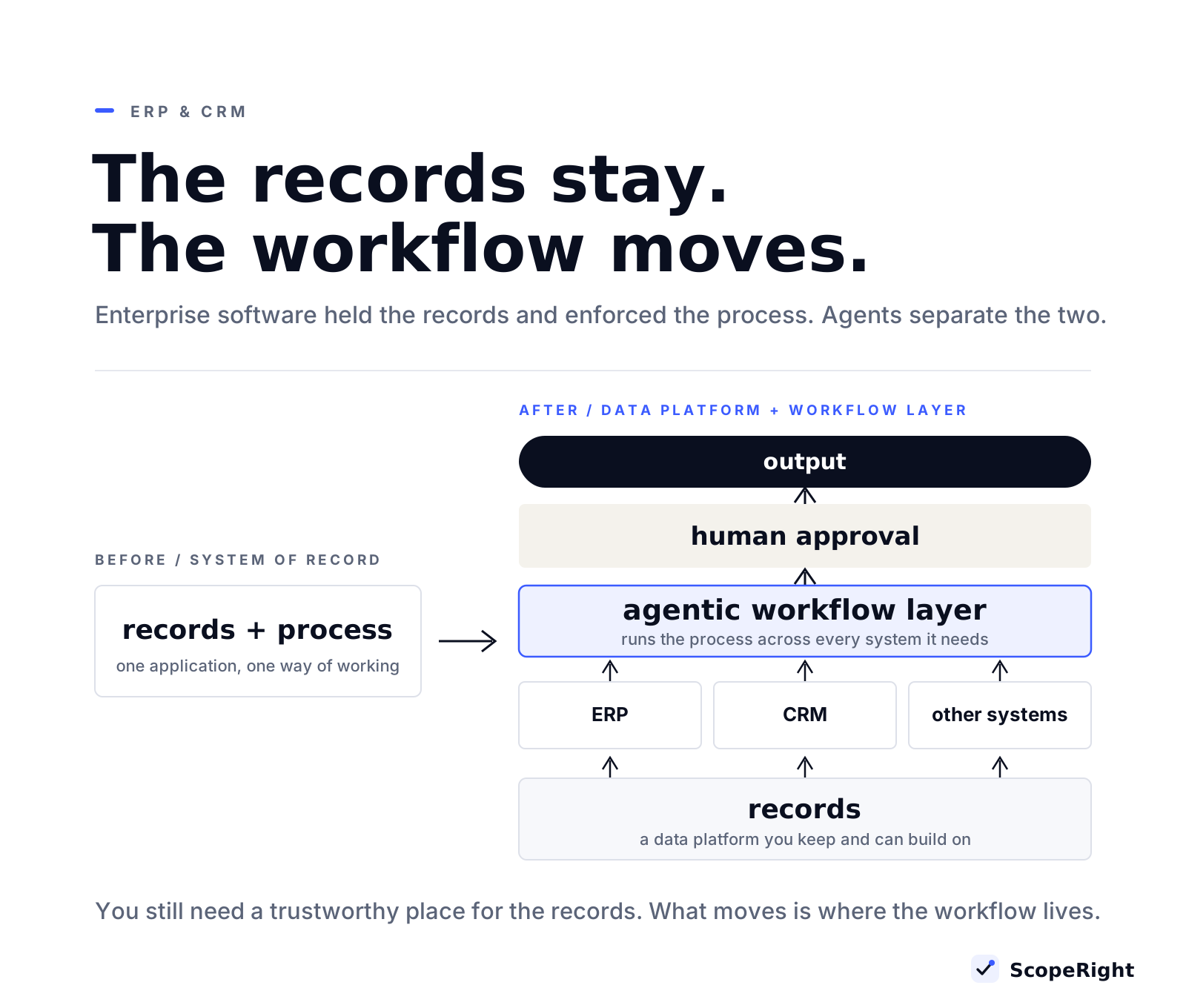
That is why "do we still need our ERP?" is the wrong form of the question. You will still need a reliable place to keep records. What is genuinely in play is where the workflow belongs, and how much of it you want to rent.
Three options: replace, connect or stay
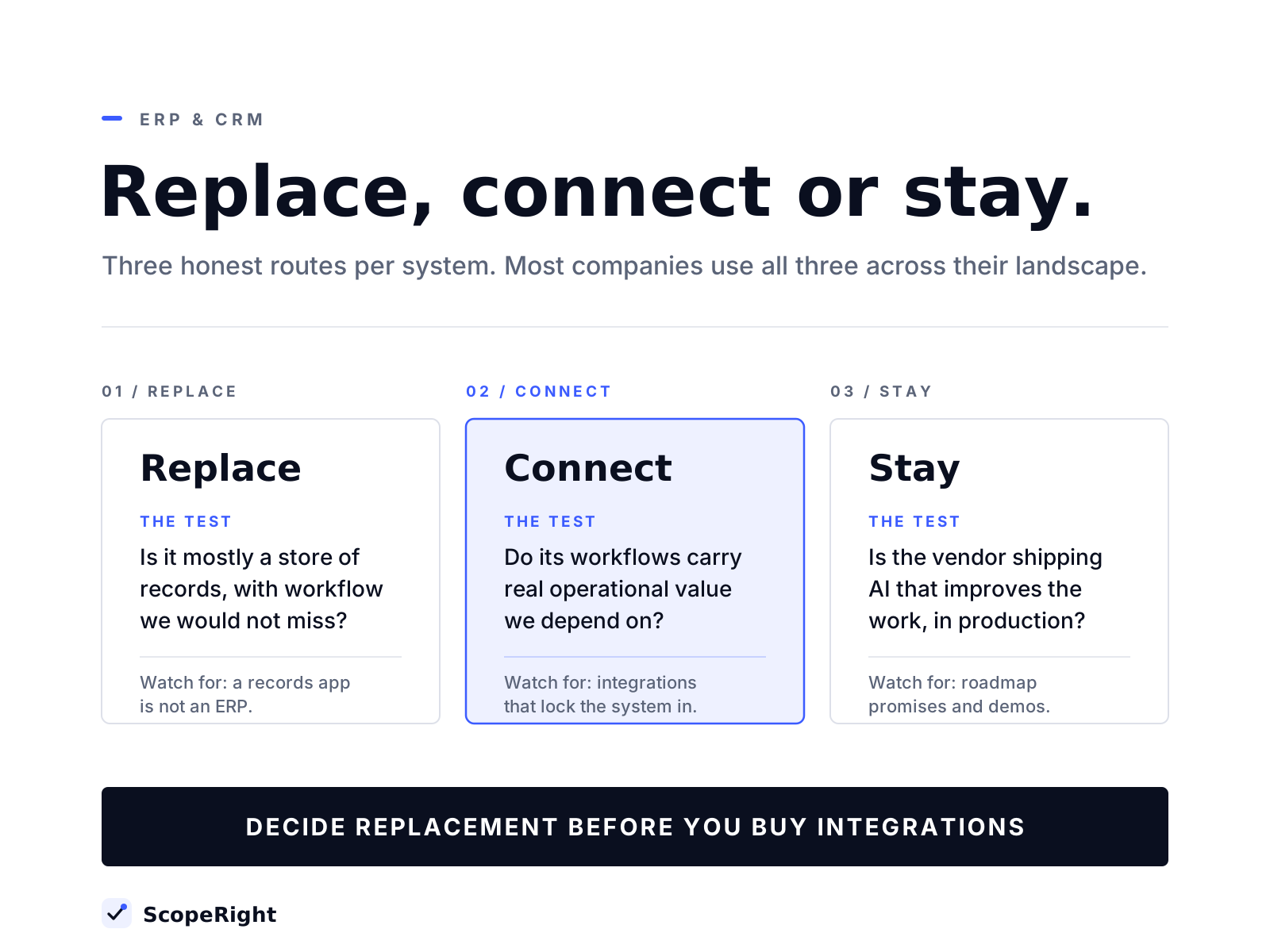
For each significant system, there are three honest routes. Most companies will use all three across their landscape.
1. Replace
If a system is mostly a place where data is stored, and its workflow adds little that your business depends on, replacement becomes a serious option — and it is more feasible than it was two years ago, because custom software on a proven foundation is no longer a multi-year programme.
One caveat we insist on: a simple records application and a full ERP are not the same undertaking. The complexity difference is enormous, in integrations, in edge cases, in compliance, in the number of people whose day changes. Replacing a bespoke access-database-with-ambitions is a project. Replacing a tier-one ERP is a transformation.
2. Connect
If the system's workflows do carry operational value, build the intelligent layer around it rather than against it.
The discipline here is sequencing. Settle the replacement question before you invest heavily in integrations. Integration work is the easiest way to make a bad system permanent: once six agents and four pipelines depend on it, the cost of leaving has quietly doubled.
3. Stay
If the workflows work, the data is in reasonable order, and your vendor is delivering AI features that improve the actual work, extending what you have is often the cheapest and safest answer. Demonstrations are not delivery, so judge the vendor on what is in production for customers like you, not on what is on the roadmap slide.
| Route | Fits when | Watch for |
|---|---|---|
| Replace | The system mainly stores records; its process logic adds little | Underestimating complexity; a records app is not an ERP |
| Connect | The workflows carry real operational value | Integration spend that locks in a system you intended to leave |
| Stay | Workflows work and the vendor ships useful AI, not demos | Roadmap promises; rising licence cost as usage grows |
How to decide, system by system
The decision is rarely about the technology. It is about five properties of each system, and they can be assessed in a workshop rather than a six-month study.
| What to assess | The question that settles it |
|---|---|
| Workflow value | If we kept only the data and rebuilt the process elsewhere, what would we lose? |
| Data gravity | How much of our critical data lives here, and can we get it out in a usable form? |
| Vendor direction | What AI capability is actually in production for customers of our size and sector? |
| Integration surface | Can an agent reach what it needs through supported interfaces, with the right permissions? |
| Switching cost | What would leaving cost in licences, migration, retraining and risk — and over what period? |
Two patterns show up often. A CRM that is really a shared address book with reporting is a replacement candidate. A production or finance core with twenty years of encoded exceptions is a connect candidate, almost regardless of how much the interface annoys people.
What should stay yours
Here is the part I would not compromise on. Your proprietary data, your business rules and your workflows are strategic advantages. They are the reason your company handles an exception better than a competitor does.
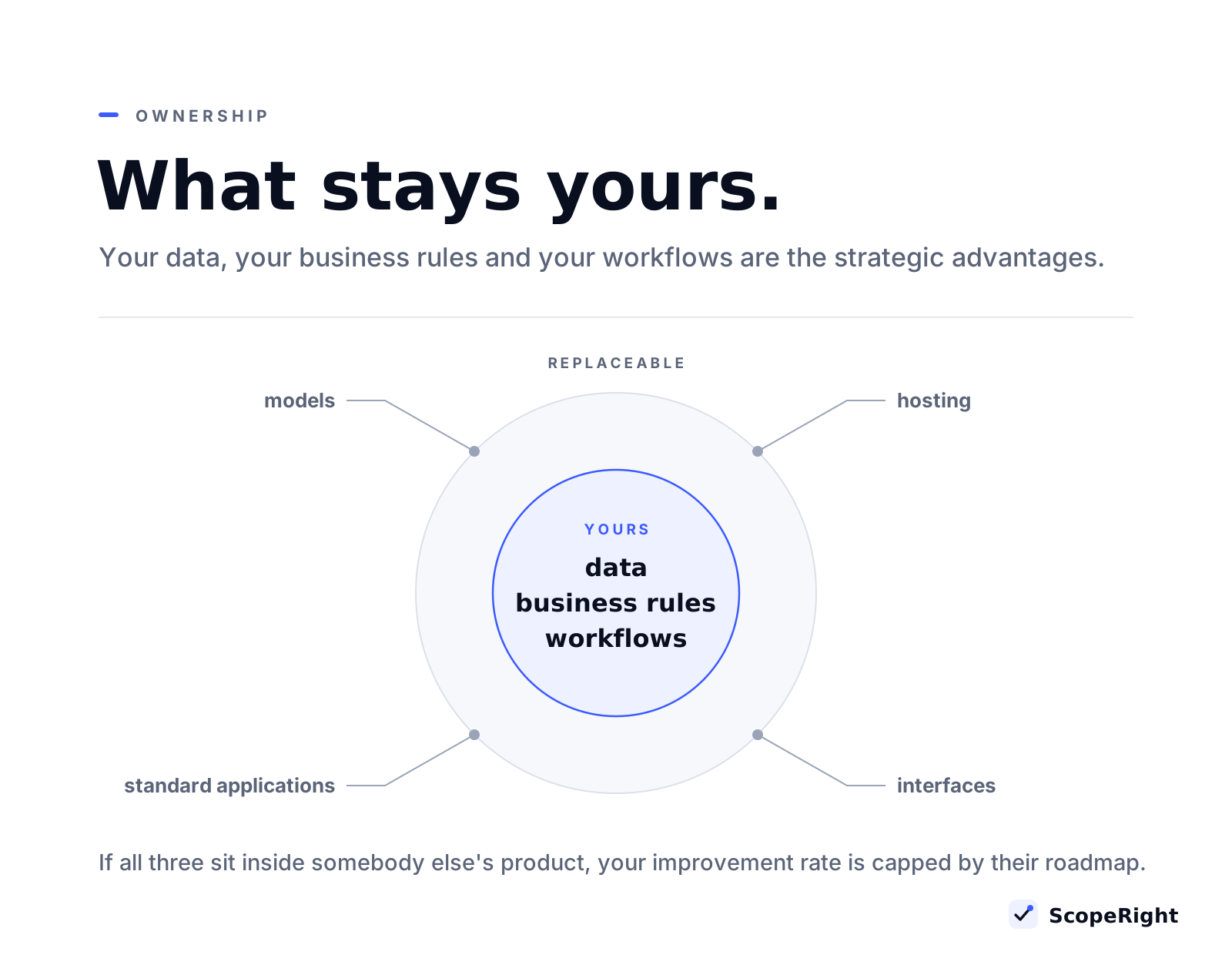
If all three of those sit inside somebody else's product, your improvement rate is capped by their roadmap. That does not mean building everything yourself. It means being deliberate about which layer holds the logic that makes you money, and keeping the rights to it. Nova, the backbone and build team I co-founded, sets out the ownership arrangement in detail in own your AI software: what to own when a partner builds it.
Custom software has become a more reasonable answer than it was, for two reasons: proven foundations remove most of the undifferentiated work, and specialist partners make a small team viable. "We could never build that" deserves re-testing — but as a scoped decision, not as an article of faith.
What this means in a portfolio
For private equity and buy-and-build, this decision repeats at every platform and every add-on, which makes it worth answering once properly. The method travels; the conclusion should not be copied. Two portfolio companies with the same ERP can land on different routes because their workflow value and switching costs differ.
What transfers between companies is the assessment itself: the same five properties, the same evidence, the same questions to the vendor. We describe that discipline in the private equity AI value creation playbook and in our view on the AI operating partner role.
Where we would start
Not with a platform selection. With one workflow that matters, and a clear statement of what a good outcome looks like — because if you cannot describe good performance, you are not ready to delegate the task.
An AI Scope Workshop is designed to produce exactly that: the workflow, the systems it touches, the approval points, the acceptance criteria, and a replace/connect/stay recommendation per system. Where the workflow is specific enough to justify it, a Minimal Viable Agent tests the conclusion in production on a narrow task before anything large is committed.
A note on independence. Nova is one possible implementation partner and I am a co-founder of it. ScopeRight's recommendation follows the client's requirements, including the incumbent vendor, alternative suppliers and internal build options, and that interest is always made visible in the decision. In plenty of cases the right answer is to stay where you are and use what your vendor ships.
The decision you are actually making
You are not choosing between an ERP and agents. You are deciding, system by system, how much of your process logic you want to rent — and for how long.
Answer that per system, write down the evidence, and the architecture follows.
Scope before solution. Evidence before scale.
This article develops an argument I first put to my network in a LinkedIn post on ERP, CRM and agents. The builder's side of the same question — where the workflow layer lives and what you own of it — is covered in Nova's companion piece, your ERP becomes a data platform: where does the workflow live?.
Frequently asked questions
- Do we still need an ERP if AI agents do the work?
- Yes, you still need somewhere trustworthy to keep the records. What changes is where the workflow lives. Over the coming years we expect systems of record to look more like data platforms, with intelligent workflows layered on top of them rather than locked inside them.
- Should we replace our ERP or build agents around it?
- Decide replacement before you invest heavily in integrations. If the system mainly stores data and adds little workflow value, replacing it may be cheaper than wrapping it. If its workflows carry real operational value, connect to it instead.
- Is replacing an ERP the same kind of project as replacing a records application?
- No. A basic records application and a full ERP differ by orders of magnitude in complexity, integrations and risk. Treating them as the same project is one of the most expensive mistakes in this decision.
- What should we keep in our own hands?
- Your proprietary data, your business rules and your workflows. Those are the parts that make the company distinctive, and they are strategic advantages. Where they live determines how much freedom you keep.
- When is staying on our current software the right answer?
- When the workflows work, the data is in good order, and your vendor is shipping AI capability that genuinely improves the work rather than demonstrating it. Extending what you have is often the lowest-risk route.
Deciding what to do with your ERP or CRM?
A free 30-minute intake gives you a first read on which systems to replace, connect or keep — before you commit to a licence or an integration programme.